Head Lice 101
*
Head Lice 101 *
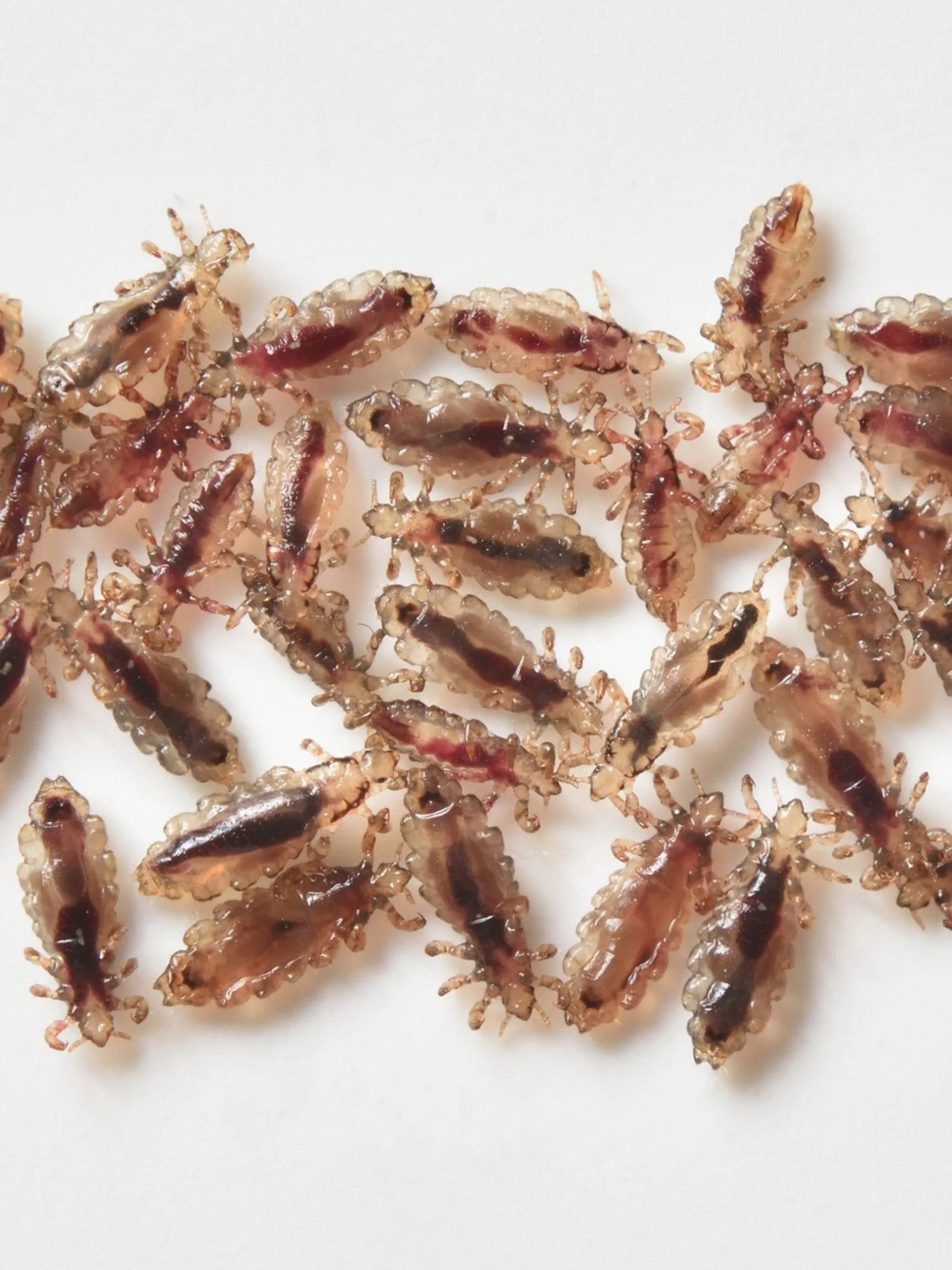
What do head lice look like?
Head lice are tiny, six-legged, blood- sucking parasites. The single insect is called a louse, and each louse's leg is equipped with a claw, enabling it to grasp onto the hair shaft. They range in size from 2mm to 4mm— approximately the size of a sesame seed.
Other factors that can affect the color of lice include: *temperature *sunlight *blood intake
Lice reproduce sexually, and mating occurs only once. The female will continue to produce fertile eggs— even if she never mates again. Pairing can begin within the first 10 hours of adult life, and she'll continue to reproduce for her lifetime, which is approximately 30 to 35 days.
What happens after mating?
The female louse lays eggs by gluing them to the hair shaft. This glue is so fast-drying that, in some instances, the louse even glues herself to the hair. She lays eggs twice a day and can lay as many as five eggs at a time—a rate that can generate as many as 200 eggs in her lifetime.
Lice life cycle?
A louse has three life stages: nits (eggs) that hatch after 7–10 days. Nymphs immature forms of the louse, become mature adults after 10–12 days. Adult lice can live up to four weeks. The female louse lays 6–10 eggs a day.
Nits: Lice eggs—or nits, as they're commonly called—generally hatch in 7–10 days. They have a sesame-seed-like shape and size. They also tend to be brownish or yellowish. The nits stick to the hair strands and don’t shake out. When squeezed between the fingernails, they make a popping sound because they are liquid-filled sacs.
Eggs need the warmth of the body to incubate, much like a chicken sitting on an egg. To survive on its own, the egg would need to be close to hatching, similar to a fetus at nine months, rather than two months.