
Understanding Head Lice: Causes, Transmission, and Facts
Head lice are a common concern for families, especially those with school-aged children. While head lice do not transmit disease, they can cause discomfort and itching. In some cases, excessive scratching may lead to secondary bacterial skin infections, making prompt and professional treatment important.
Head Lice Are Not About Cleanliness
Getting head lice is not related to personal hygiene or the cleanliness of your home. Lice infestations can affect anyone and are simply the result of exposure.

How Head Lice Spread
Head lice are primarily spread through direct head-to-head contact with an infested person. This is the most common form of transmission, particularly among children during everyday activities such as:
School interactions, sports, and extracurricular activities
Playing at home and sleepovers
Playgrounds, camps, and social gatherings
Less commonly, lice may spread through indirect contact with personal items, including:
Hats, scarves, coats, combs, brushes, and hair accessories
Bedding, pillows, towels, upholstered furniture, and stuffed animals
How Common Are Head Lice?
In the United States, an estimated 6 to 12 million head lice infestations occur each year, most frequently among children ages 3 to 11. Some studies suggest that girls are more commonly affected than boys, likely due to increased head-to-head contact.
What Are Head Lice?
They are small, six-legged parasites that feed on blood. As their name implies, they mostly live on the human head, using their tiny claws to grip and move through hair. Each louse (the singular form of “lice”) is about 2 to 4 millimeters long, roughly the size of a sesame seed.
The size of lice alone can make them hard to find on the head, and their color doesn’t help either! Head lice can vary in color from yellowish, grayish, and brownish to reddish, and like chameleons, lice have the ability to adapt to their environment. For example, lice found on dark-haired or dark-skinned individuals are likely to be darker than those found on blond-haired or light-skinned individuals. Other factors can also affect the color of lice, including temperature, sunlight, and blood intake.
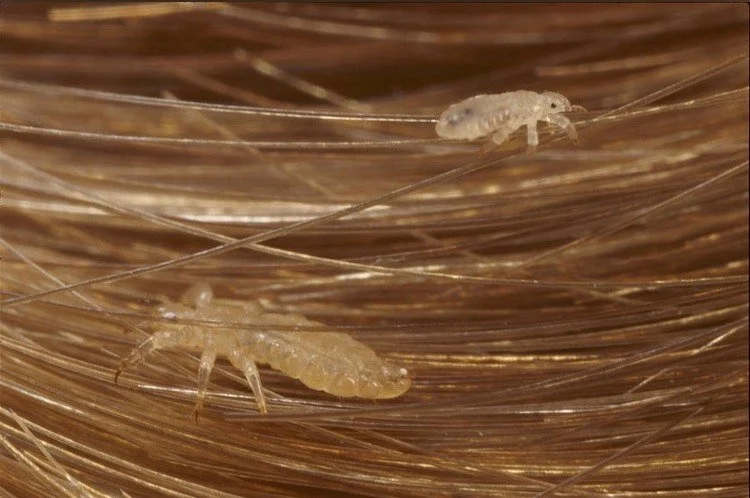
Head lice reproduce quickly, with a female louse laying six to ten eggs, or nits, every day. With a life cycle of about 35 days, one female can produce up to 200 nits in her lifetime, all after mating only once. You read that right – the female louse only needs to mate once to produce fertile nits; after that, she never mates again.
This means that in one month, you can go from 1 louse to at least 201 lice. I say "at least" because this does not account for the reproduction of the lice she produces.
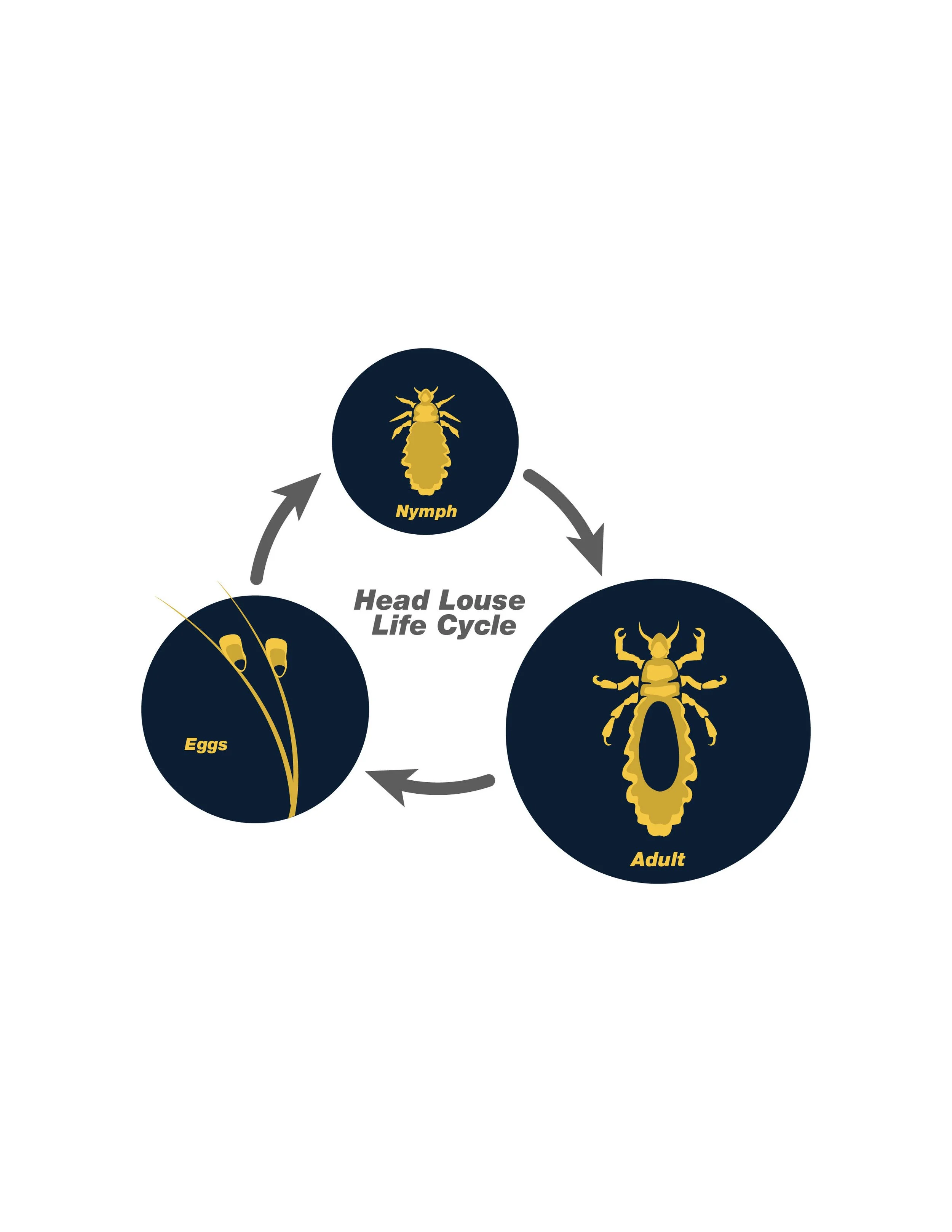
A louse has three life stages, which it passes through over the course of 35 days:
Nit (lice egg), which hatches after -10 days;
Nymph (immature form of louse), which becomes a mature adult 7-10 days after hatching;
Adult louse, which lives up to 35 days.
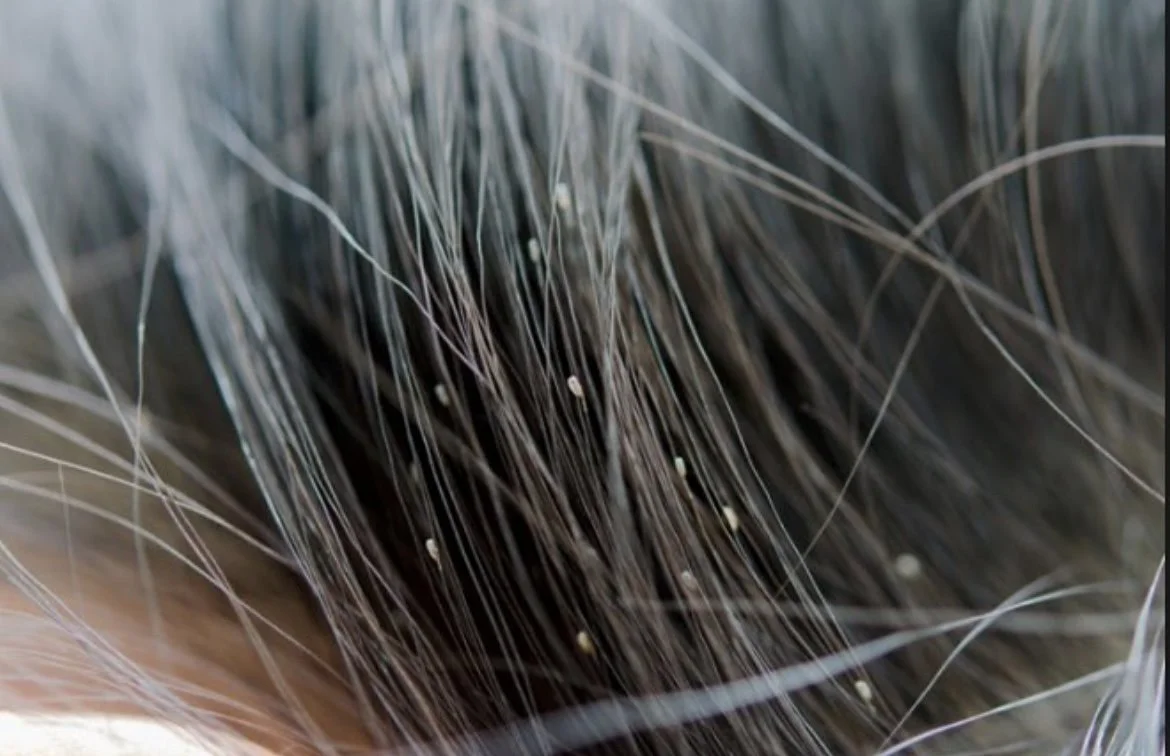
At the beginning of the head louse life cycle, the female louse lays her egg, also known as a nit, and uses a sticky substance (secreted glue) to attach the nit to the hair shaft about five millimeters from the scalp. Because of that sticky substance, the nits can’t be shaken out. This is a biological advantage for the louse, but it makes things more difficult for us humans!
The appearance of a nit is similar to a sesame seed, but nits tend to be yellow-brown in color. A nit that is whitish and transparent will be empty, indicating that the baby louse has already hatched and made its way to the scalp to feed. At that point, it becomes a nymph. Because that glue holds so well, nits can't be brushed or washed out. They have to be combed off the strand, which is why the Nit Terminator Comb is the one tool we tell every family to own.
After hatching, the nymph is a bit like any newborn creature: it is not agile and needs immediate nourishment. If a nymph doesn’t feed within the first two hours, it will not survive. But in addition to needing to be close to the scalp to feed on blood, nits also need warmth. That’s why the eggs are laid so close to the scalp!
In comparison to their adult counterparts, nymphs are smaller and tend to be more transparent in color. This is advantageous for lice because it makes them more difficult to see with the naked human eye, and thus more difficult to remove and eliminate.
Adult lice are more agile than nymphs and can move as fast as 9 inches per minute. This speed helps them travel from one person to another, which spreads and starts new infestations. Still, lice do not move around randomly.
Head lice use their front antennae to sense smells, humidity, temperature, and even blood type. This helps them find the right food source. You might wonder what makes a food source compatible, and if blood type really matters. It does. Each louse has its own preference. For instance, if a louse feeds on Type O positive blood, it cannot survive on Type AB negative blood. If it tries, it will die.
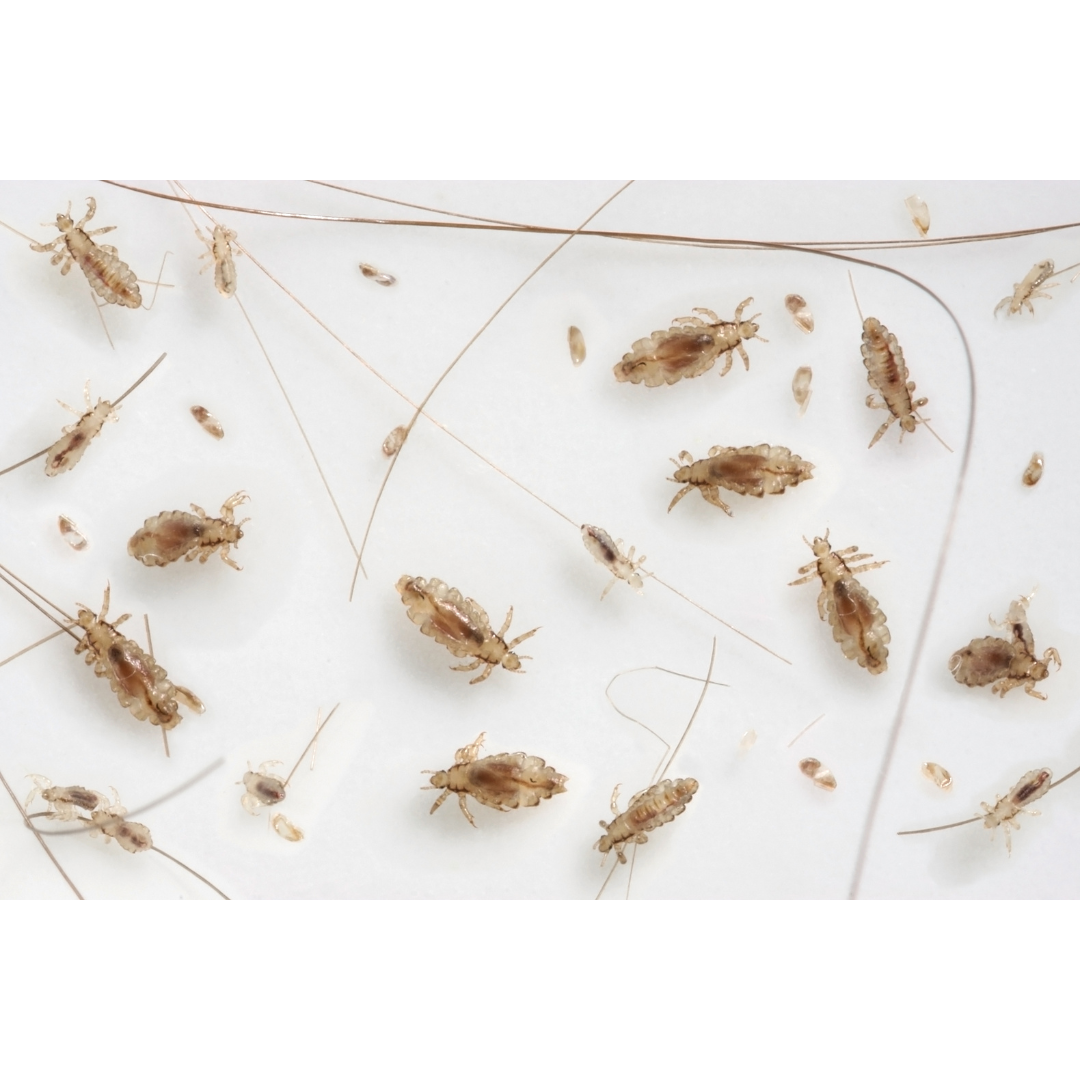
This is why lice can’t spread willy-nilly; they have to search for conditions that facilitate their survival. When those conditions are detected, the louse uses its speed and strong survival instinct to run to its next host while avoiding exposure to bright lights or strong odors. It is also at the adult life stage that reproduction occurs, starting the life cycle all over again!
Understanding this cycle is exactly why we treat the way we do. See how our in-home lice removal across New York removes every louse and every nit in one visit, before the next generation can hatch. For the full parent's guide, Let's Talk Lice is Eliana's complete book on the subject.
