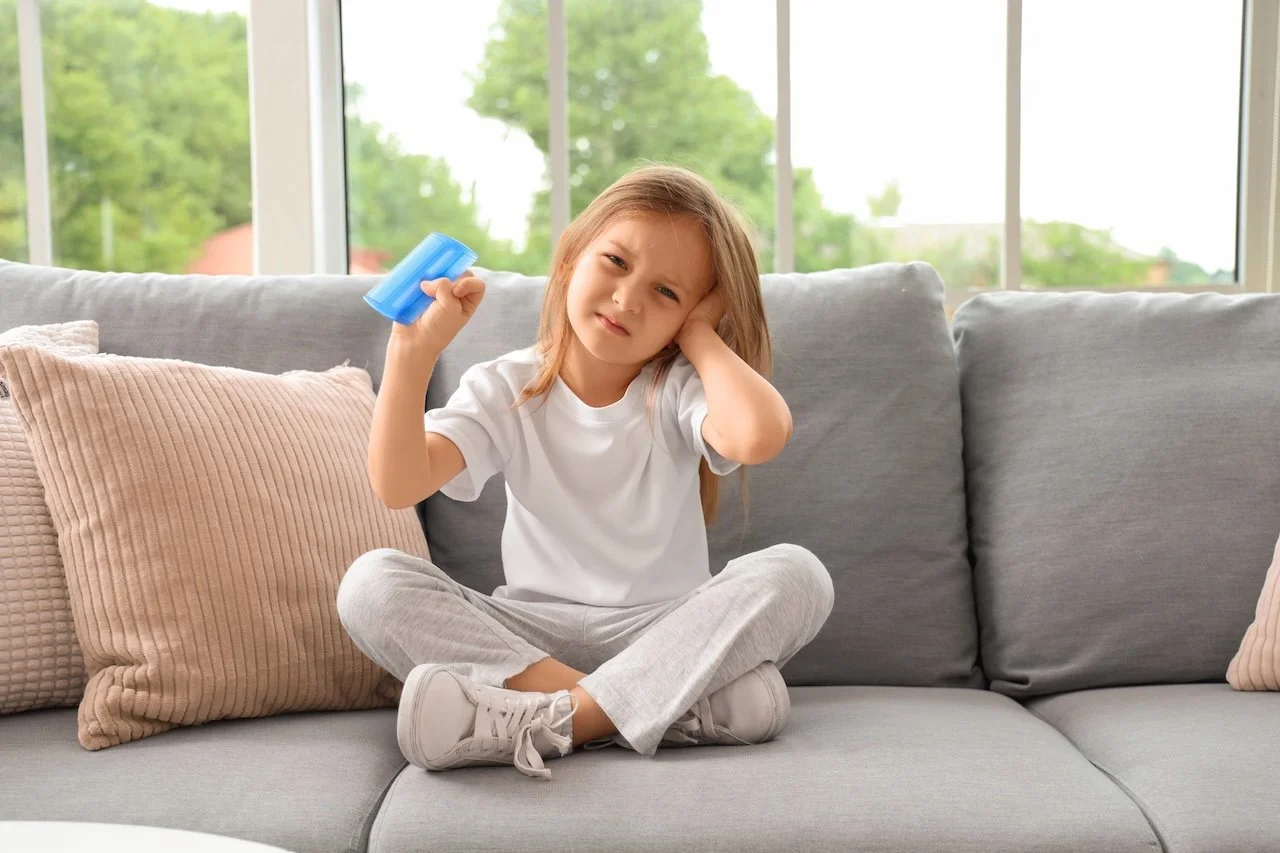
Why Upper East Side Families Prefer In-Home Lice Treatment

There are several reputable lice removal clinics with physical addresses on the Upper East Side. There are storefront treatment centers within walking distance of every major UES school. There are even hospital-affiliated dermatology offices that handle the occasional lice case.
And yet, when UES families actually find lice on their kid, the overwhelming majority don't go to any of those places. They book an in-home appointment. A specialist arrives at their apartment, often within 1 to 3 hours, treats the case privately, leaves a clearance letter, and disappears.
This isn't random. UES family life is structured in a specific way, and in-home lice treatment fits that structure almost perfectly while clinic-based treatment fights against it. After 12+ years serving Upper East Side families through Larger Than Lice, the pattern is consistent. Here's what's actually driving it.
Need same-day in-home treatment? Larger Than Lice serves all of the Upper East Side 24/7, with discreet arrivals and same-day clearance letters. Call (631) 810-3938 or book online.
The Short Answer
UES families prefer in-home lice treatment because the alternative, walking a visibly itchy child through your building, into a taxi, into a public clinic waiting room, and back home, creates social, logistical, and emotional costs that simply don't exist with in-home service. The same factors that make UES a great place to raise kids (dense social networks, building communities, prestigious schools, intense activity schedules) also make public lice clinic visits uniquely undesirable for UES families.
Let's break down what's actually behind that preference.
1. Doormen, Neighbors, and Building Privacy
This is the number one reason cited by UES families when we ask why they chose in-home treatment. UES apartment buildings have doormen who recognize every resident, every regular guest, and almost every package. The doorman has seen your kids since they were three. They notice patterns.
A clinic-based lice treatment means:
Leaving the building with a clearly itchy or self-conscious kid
A taxi or Uber to an identifiable clinic location
Returning an hour later with the same kid
Potentially repeated visits over multiple days
A doorman who connects the dots
An in-home treatment means:
A specialist arrives at your door in unmarked clothing
Tells the doorman they're visiting your family (no service is mentioned)
Treatment happens entirely inside your apartment
They leave the same way they came
Nobody connects anything to anything
For UES families, who often spend 10 to 30 years in the same building, the long-term privacy value of an unmarked visit is real. Reputation, neighbor relationships, and the unspoken social currency of building life all matter.
The Larger Than Lice protocol specifically addresses this. Specialists arrive in normal street clothes carrying an inconspicuous bag. No company logos. No identifying equipment. To the doorman, your specialist is a friend, a tutor, or a family helper visiting for the afternoon.
2. School Communities Are Tightly Connected
UES private schools (Brearley, Spence, Chapin, Dalton, Trinity, Nightingale, Marymount, Allen-Stevenson, St. Bernard's, Browning, and many others) form a deeply interconnected social fabric. Siblings overlap across schools. Parents serve on the same boards. Building neighbors send their kids to the same institutions. Birthday parties cross school lines almost every weekend.
In this environment, a lice case discovered at a public clinic is a case that could be talked about. Not maliciously, just because UES family communities talk constantly about everything affecting their kids. A mother seen entering a known lice clinic with her child becomes a conversation starter at the next school pickup.
An in-home treatment leaves no footprint. There's no clinic check-in. There's no waiting room of other parents. There's no public-facing record of the visit. The case is handled, the school receives a clearance letter, and the rest of the community has no way to know unless the family chooses to share.
We covered the broader dynamics of why lice outbreaks are common in NYC private schools in detail. UES schools sit at the most socially interconnected end of that spectrum.
We serve the Upper East Side and every Manhattan neighborhood as part of our 24/7 lice removal across Manhattan
3. Children's Schedules Don't Have Slack
A typical UES elementary school kid runs a daily schedule that resembles a mid-career professional. School from 8:30 to 3:30. Mandarin tutor at 4:00. Soccer or squash at 5:30. Homework and dinner from 7:00 to 8:30. Bedtime routine at 9:00.
A clinic-based lice treatment requires:
Leaving the house (15 minutes)
Taxi or subway to clinic (15 to 30 minutes)
Wait time (15 to 60 minutes)
Actual treatment (60 to 90 minutes)
Return home (15 to 30 minutes)
Total: 2 to 4 hours of disrupted schedule
An in-home treatment requires:
Specialist arrives at your apartment
Kid stays in pajamas, on the couch, with their iPad or favorite show
Total: 1 to 2 hours, with no transit, no waiting, no disruption to siblings
For UES families, the time math heavily favors in-home. A working parent doesn't have to leave work. A nanny or sitter doesn't need to coordinate transport. Other kids in the household continue their own routines uninterrupted. Homework still gets done that evening.
This is also why families with multiple children almost always choose in-home: treating two or three kids at a clinic means multiple separate appointments or one long marathon visit. In-home treatments can handle multiple family members back-to-back in the same session.
4. The Apartment Itself Is the Better Treatment Setting
This sounds counterintuitive until you've seen both. A UES family apartment, well-lit, comfortable, quiet, with familiar surroundings, is actually a better environment for a 1 to 2 hour lice treatment than any clinic waiting room.
For kids especially, the apartment setting:
Reduces anxiety (they're at home, in their own space)
Allows screen time, snacks, books, and favorite toys during treatment
Makes restless cooperation much easier
Lets siblings continue normal activity nearby
Doesn't expose them to other potentially infested patients
For parents:
No taxi fare or transit logistics
Can answer work emails or take calls during treatment
Watch the process if you want, or step away if you don't
Continue normal household activity (laundry, prep dinner, supervise other kids)
We've treated children who were initially terrified at the idea of a "lice appointment" and ended up curious and even cheerful by minute 20 because they were just sitting on their own couch watching their show. That outcome doesn't happen in a clinic.
5. The Discretion Factor for Older Kids
Pre-teens and teenagers have an intense relationship with social embarrassment. A 13-year-old who finds lice in her hair on a Tuesday night experiences this as a personal crisis. The last thing she wants is to be seen walking into a known lice clinic on the Upper East Side, where the chance of running into a friend, a friend's parent, or a classmate is genuinely high.
In-home treatment removes that risk entirely. The case is handled privately. She gets her school clearance letter. Nobody at school knows. Nobody in her social group knows. The emotional weight of the experience is significantly lighter, which matters more than parents sometimes realize for kids of this age.
We see this play out repeatedly in pre-teen and teen treatments across UES neighborhoods. The relief on a 13-year-old's face when she realizes the appointment is happening in her own bedroom, not a clinic, is consistently one of the most striking parts of our work.
6. Multiple Children, Multiple Schedules
The average UES family has 2 to 3 children, often in different schools or grade levels with different activity schedules. When one child has lice, the right move is to screen the entire household within 24 hours. We covered the reasoning in how quickly lice spread through a household.
A clinic-based treatment for multiple kids becomes operationally complicated:
Coordinating who goes when
Multiple separate appointment slots
Different parents picking up different kids from different schools
Multiple round trips to and from the clinic
Often spread across multiple days
A single in-home appointment can handle the entire family at once:
All children screened in 10 to 15 minutes
Treatment delivered to whoever needs it
All in the same 2-hour window
One coordinated event, not five separate ones
For families with three kids, the time difference between in-home and clinic-based treatment is typically 4 to 6 hours of saved chaos. That's a substantial value, especially during a school week.
7. The 24/7 Availability Factor
UES families don't run on a 9-to-5 schedule. Parents fly. Travel. Work late. Kids come home from sports practice at 7 PM. Lice get discovered at bath time, dinner time, or during the bedtime hair-brushing routine, almost never during the workday.
Most clinic-based lice services have business hours (typically 9 AM to 6 PM, with limited weekend availability). If you discover lice on a Sunday night, you wait until Monday. If you discover it on a Friday at 8 PM, you're potentially looking at a Saturday morning clinic appointment, after a long night.
In-home services like Larger Than Lice operate 24/7. A specialist can be at your UES apartment by 11 PM on a Sunday if needed. The match between when UES families actually need help and when help is available is much tighter with in-home service. We covered the late-night discovery scenario in detail in what to do if you discover lice at night in NYC.
8. Cost Comparison Surprises Most Families
A common assumption: clinic-based treatment is cheaper than in-home. The reality is more nuanced.
Typical UES Lice Treatment Costs
Clinic-based with FDA-cleared heat devices: $250 to $400 per person, plus tax. Often requires additional combing time billed separately. Some clinics charge for follow-up visits.
In-home professional treatment: $200 to $350 per person, flat rate. No travel fees within the UES. No follow-up charges. Clearance letter included. Typically includes a 4-week lice-free guarantee.
Hidden costs of clinic visits for UES families:
Taxi fares to and from clinic ($30 to $60 round trip)
Lost work hours for parent transit (often $100+ in opportunity cost)
Childcare for siblings during clinic time
Additional product purchases sometimes pushed at checkout
When totaled, in-home treatment is usually 10 to 25% cheaper than clinic-based for UES families, despite the perception of being more "premium." The pricing math has changed significantly in the last 5 years as in-home services have scaled.
Larger Than Lice 4-week lice-free guarantee is included with every in-home appointment. FSA and HSA cards are accepted.
9. The "Don't Move A Sick Kid" Instinct
Even though lice isn't contagious through casual contact and isn't a "sickness" in the medical sense, parents instinctively don't want to move an itchy, stressed, embarrassed child across the city. The instinct is correct.
Moving the affected child:
Increases the chance of head-to-head contact with strangers (in taxis, on subways)
Creates emotional stress at exactly the wrong moment
Often involves siblings or other family members tagging along
Generates exactly the kind of public visibility families want to avoid
Keeping the child at home and bringing the specialist to them removes all of these. The child stays in their environment. The treatment happens in private. Nothing about the experience requires public exposure.
10. The Quality of Care Is Often Better
This is the part many UES families discover after their first in-home appointment: the quality of work is often higher in-home than in a clinic.
Why?
Individual attention. A clinic operates with multiple chairs going at once. Each specialist may rotate between patients. An in-home specialist works on your family exclusively for the duration of the visit.
No time pressure. Clinics have to manage appointment schedules. The next patient is waiting. In-home appointments take as long as they take. If your child has long, thick hair that needs extra time, the specialist takes that time.
Better lighting and seating control. A specialist can move you to the brightest, best-lit spot in your apartment. Most clinic seating is fixed.
Less rushed handoff. Aftercare instructions, clearance letters, and Q&A happen at a calm pace at the end of the visit, often over coffee or tea with the parent. Clinic handoffs are typically rushed.
In our experience, the average in-home treatment runs 15 to 30 minutes longer than the same treatment would in a clinic, simply because there's no operational pressure to clear the chair.
What UES Families Typically Look For in a Lice Removal Service
After years of working with UES families specifically, the criteria they most consistently care about are:
24/7 availability, including evenings and weekends
In-home only, no clinic option needed
Discreet arrival, unmarked clothing, no logos
Flat-rate pricing, no surprise fees
One-visit completion, no multiple appointments
School clearance letter for next-morning return
Pesticide-free products safe for kids and pregnant family members
Family-wide screening in a single visit
Lice-free guarantee of at least 4 weeks
FSA / HSA acceptance for payment flexibility
If you're choosing a lice removal service for the UES, those are the 10 criteria worth checking before booking.
When Clinic-Based Treatment Still Makes Sense
To be fair, clinic-based treatment isn't always the wrong choice. There are cases where it can work well.
For families without doormen or strong privacy concerns. Some UES families live in townhouses or smaller buildings where the doorman dynamic doesn't apply.
For older kids who specifically prefer the clinic environment. Rare but it happens.
For families who feel safer with FDA-cleared device-based protocols. Some clinics use specialized heated-air devices that are well-marketed and well-documented. Manual nit removal in-home achieves similar results with different methodology.
For walk-in screening without an appointment. Some clinics allow drop-in checks. In-home services require booking.
For most UES families, however, the privacy, time, cost, and quality factors push toward in-home as the default.
What an In-Home Treatment Visit Actually Looks Like for a UES Family
For families who haven't experienced an in-home visit before, here's what the typical 2-hour appointment looks like in a UES apartment.
Step 1: Arrival
A specialist arrives in normal street clothes carrying an inconspicuous bag. They greet the doorman without identifying the service. They knock, you let them in, they set up at your kitchen counter, dining table, or wherever has the best light.
Step 2: Screening
A full screening of the affected child confirms the case and assesses severity. If other family members want to be screened, this is done in the same visit, usually in 5 to 10 minutes per person. Anyone clear is noted and skipped from treatment. Anyone with lice is queued for treatment.
Step 3: Treatment Setup
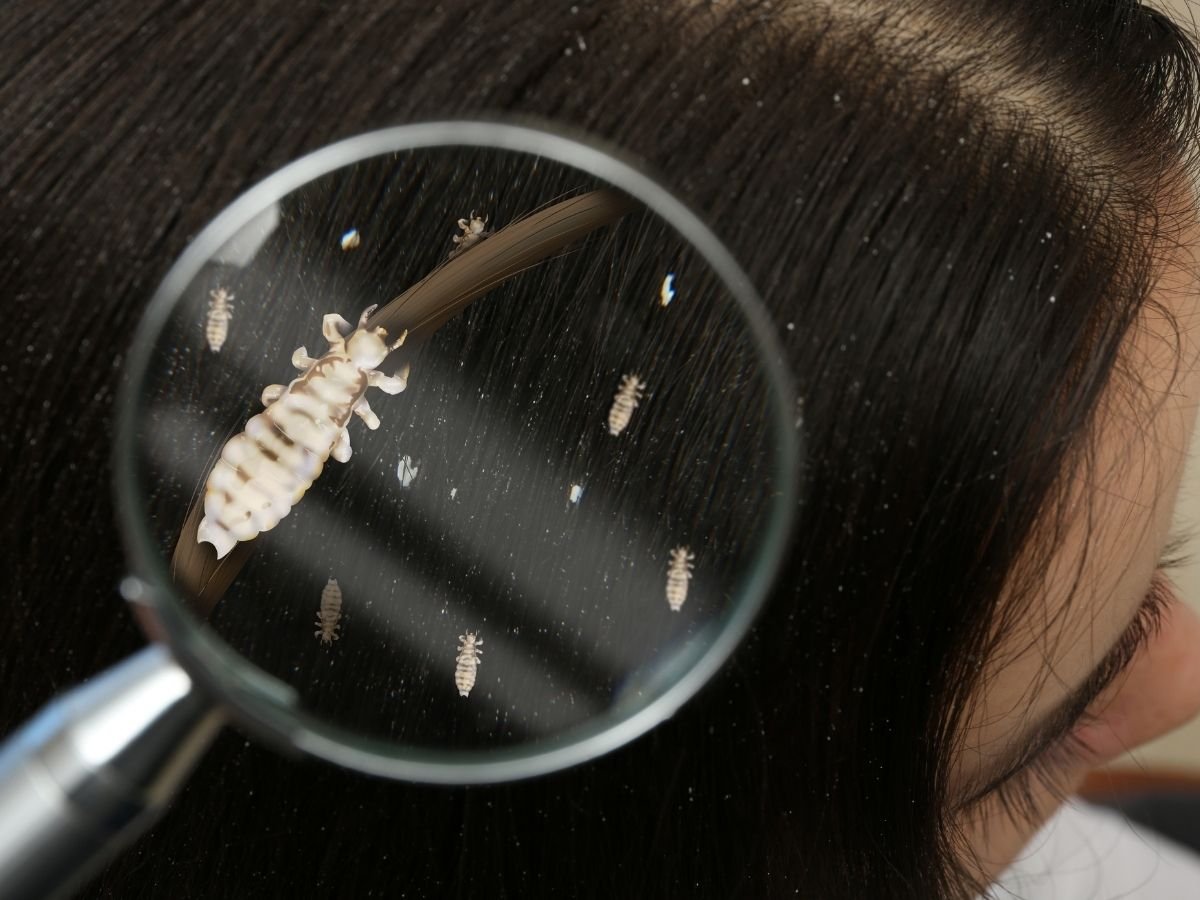
The specialist sets up the workspace. A clean towel on the chair. A pesticide-free treatment solution. A magnifying lamp. A metal lice comb. Bright lighting. The kid is offered an iPad, a book, or a snack.
Step 4: Treatment
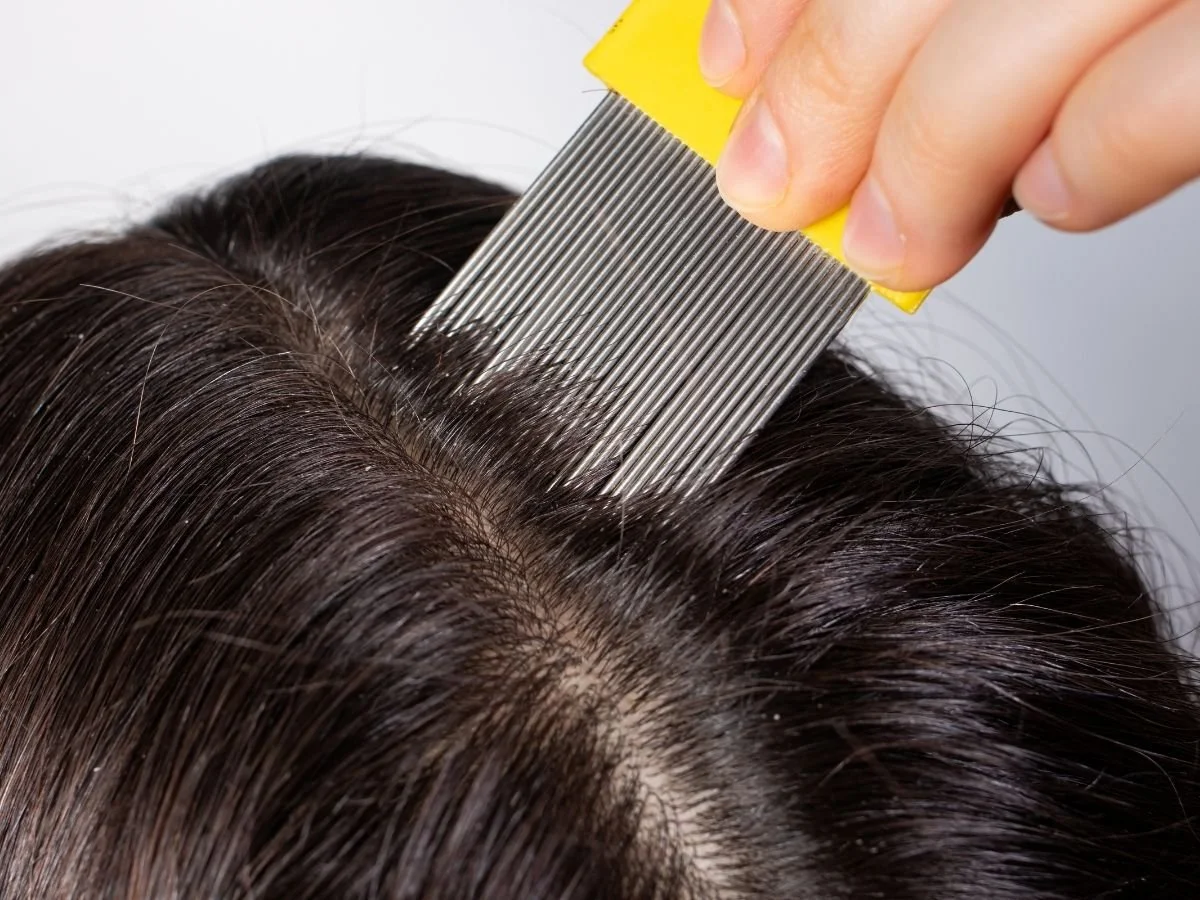
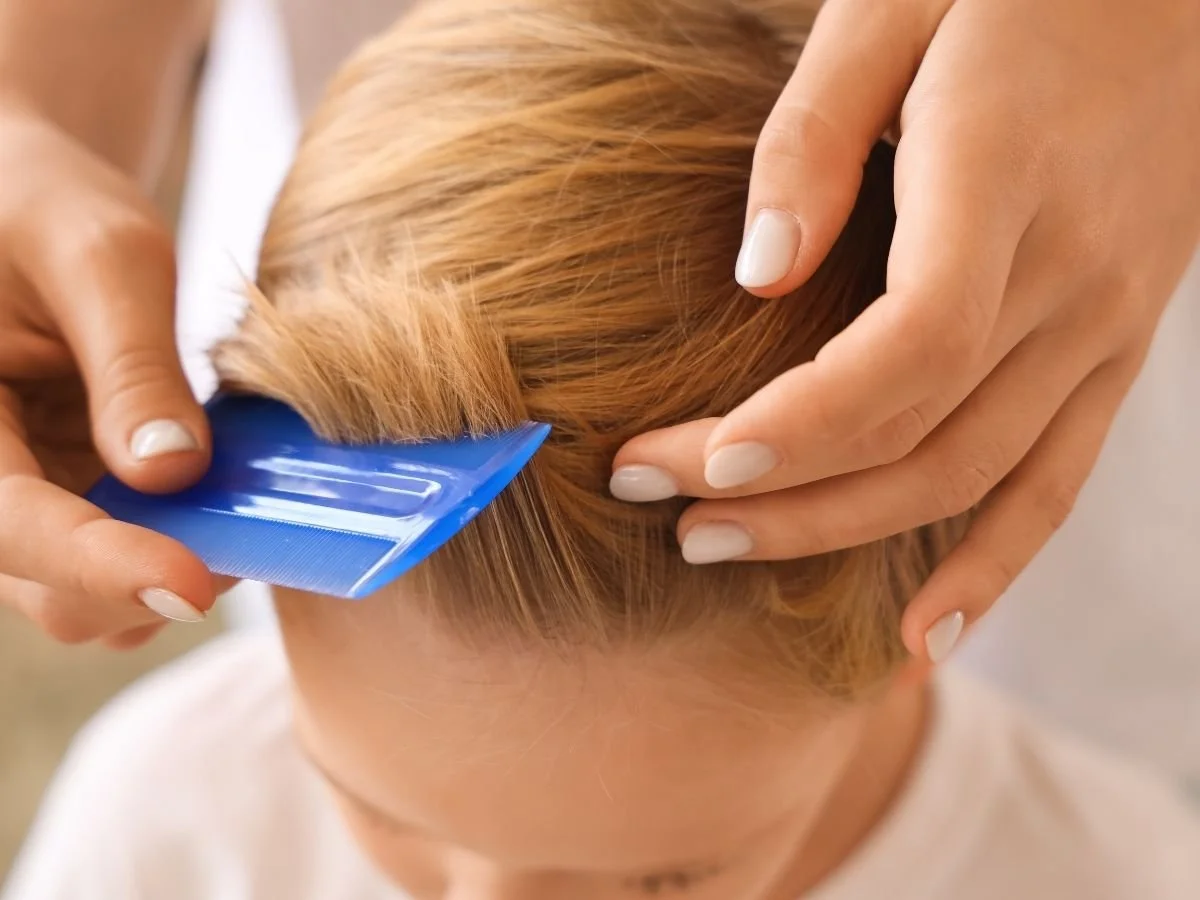
The pesticide-free solution is applied and sits for 5 to 10 minutes. Then comes the manual removal: strand-by-strand combing under bright light, with the comb wiped onto white paper towels after each pass and inspected. Sections are re-combed and visually re-checked.
For an average elementary school child with shoulder-length hair, this takes 45 to 90 minutes. Longer for very long, thick, or curly hair. The specialist talks to the child throughout, makes the experience as low-key as possible, and answers parent questions.
Step 5: Final Check and Clearance
A final full-head inspection under magnification confirms the case is cleared. The specialist writes a clearance letter on the spot. You get printed aftercare instructions. The specialist explains the 4-week lice-free guarantee and the 14-day follow-up schedule.
Most UES families we treat keep Buzz Off Lice Repellent Spray by the door afterwards. A quick spritz before school is the easiest way to stop it moving between siblings.
Step 6: Departure
The specialist packs up, says goodbye to the family, and exits the same way they came. Total visit time: 1 to 2 hours per person treated. The doorman has no information about what happened. The case is closed.
Frequently Asked Questions
-
Usually within 1 to 3 hours of your call, day or night. Larger Than Lice operates 24/7 across the UES with same-day and same-evening availability.
-
No. The specialist brings everything. You don't need to wash your child's hair beforehand, clear out a room, or prep in any specific way. Just have a well-lit area available and your child relatively cooperative.
-
No. Specialists arrive in normal street clothes with no identifying gear or logos. They will not announce the service to the doorman or anyone else in the building.
-
Flat-rate pricing based on hair length, typically $200 to $350 per person. No travel fees within UES. No surprise charges. FSA and HSA accepted.
-
Yes. A single appointment can handle multiple family members back-to-back. This is one of the biggest cost and time savings versus clinic-based treatment.
-
Yes. Larger Than Lice clearance letters are accepted at every UES public and private school. The letter includes the treatment date, specialist credentials, and guarantee terms.
-
The 4-week lice-free guarantee covers any reappearance within 30 days. The specialist returns to re-treat at no additional charge. This is the standard policy.
-
Yes. All Larger Than Lice products are pesticide-free, natural, and safe for use on infants, toddlers, pregnant women, and anyone with chemical sensitivities.
-
A trained specialist completes in one visit what would take a parent 4 to 6 hours of careful work, plus follow-up sessions over 1 to 2 weeks. The professional success rate is also significantly higher because of training, equipment, and method. For a deeper breakdown, see can you get rid of lice in one day.
The Bottom Line
Upper East Side families prefer in-home lice treatment because every aspect of UES family life, doormen, schools, schedules, social networks, kids' embarrassment, multiple-child households, makes the in-home option meaningfully better than clinic-based alternatives. The privacy is better. The time is shorter. The cost is comparable or lower. The quality is often higher. The emotional toll on kids is significantly less.
For most UES families, the only reason to consider clinic-based treatment is unfamiliarity with the in-home option. Once a family has experienced one in-home visit, they almost always book in-home for any future needs.
If you've just found lice on a UES child or need a screening to be sure, Larger Than Lice answers 24/7 with discreet, in-home appointments across the entire Upper East Side, from East 60th Street through East 96th Street, from Fifth Avenue to the East River.
A specialist can be at your apartment this evening, finish the job, and have a clearance letter ready before school tomorrow.
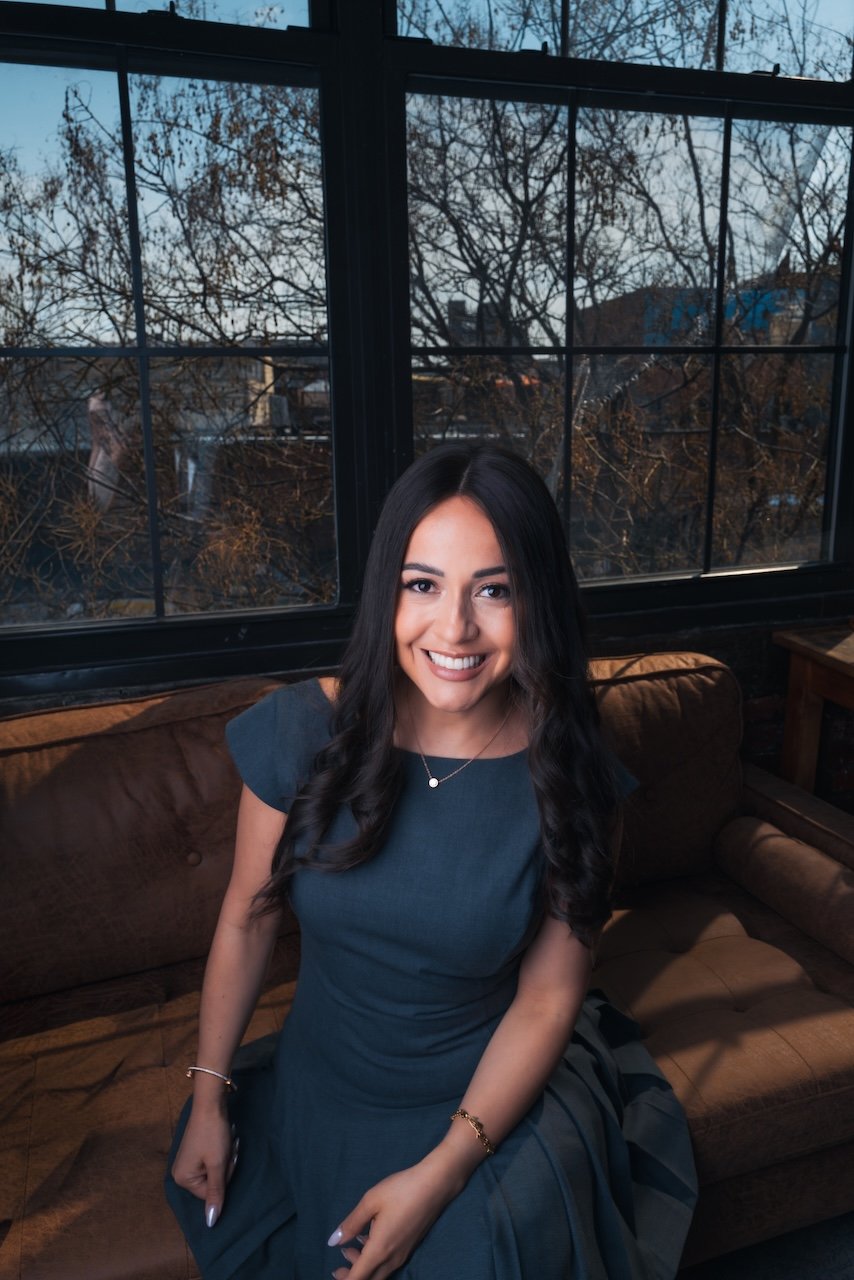
Hi, I'm Eliana
Founder of Larger Than Lice
For 12+ years, I've helped over 35,797 NYC families get through the exact moment you're in right now. Take a breath. We've got you.
Trusted by 35,797+ NYC Families
Rated 5 stars on Google, Yelp & BBB
Found Lice Right Now?
Don't wait until morning.
Call (631) 810-3938
Anytime. Anywhere. Larger Than Lice.®